
Teach it what to look for.
A defect, a species, a detail in an inspection photo. I train and adapt image models around the things your team needs to recognise, then test them on the awkward examples as well as the obvious ones.
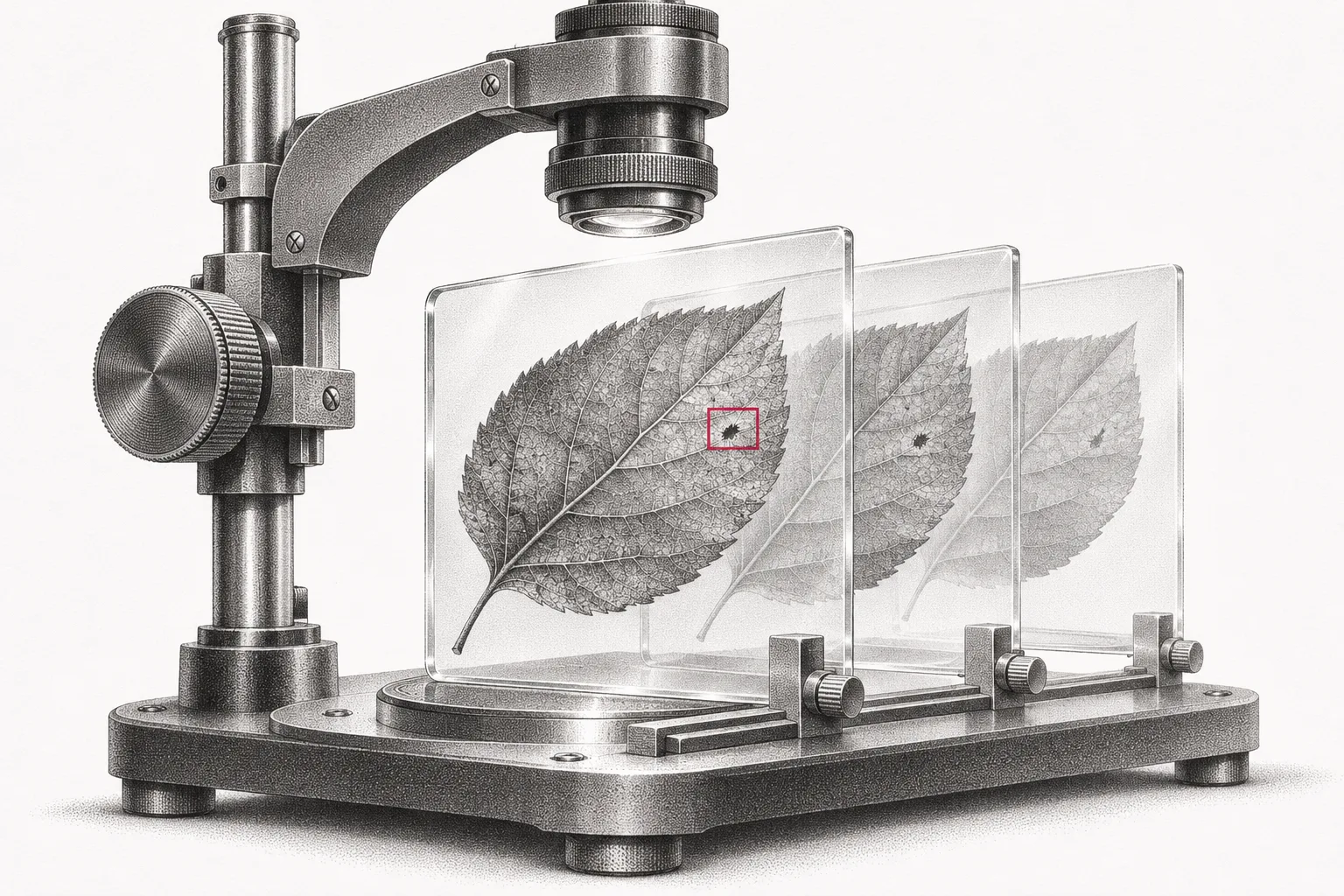
Your categories. Your real-world conditions.
I’ve trained image and classifier models, and built the tooling around data review and model experiments. I enjoy the whole loop: making the labels useful, trying an approach, finding its weak spots, and getting it running where it needs to work.
- Visual inspection
- Classify defects or conditions in product, equipment, or site photos. Send unclear images back to a reviewer with the original image attached.
- Specialist image collections
- Organise research imagery, camera-trap photos, or technical archives using categories defined by the people who know the domain.
- Visual safety checks
- Flag potentially unsafe conditions for review. Agree which things the images can actually establish, and which need a person on site.
A scratch, a shadow, or something new?
An inspection team has years of photos, but small defects are easy to confuse with reflections. A useful first build separates known conditions and makes unfamiliar examples easy to review.
Example engagement · Illustrative workflow, not a client result or live model demonstration.
Input
Inspection photos and examples reviewed by your specialists.
Model task
Suggest a category; flag uncertain or unfamiliar images.
Human decision
The reviewer checks the original image and records the final label.
What we’d measure.
- Misses and false alarms
- Measure each important class separately, including defects that are rare but costly to miss.
- New conditions
- Test on unseen sites, cameras, lighting, and capture periods—not near-duplicates of training images.
- The actual device
- Check speed, memory, and offline behaviour on the hardware you intend to use.
The inspection criteria come from your domain experts. We test the model against them and define when it must defer to a person.
The data work matters as much as the model.
My image annotation and QA work is about making human review useful for training. The anonymised case study describes that part of the engineering.
Read the annotation case studyStart with one useful test.
Bring one task, a few representative examples, and the constraints that matter. We’ll agree what to compare before starting.
Model feasibility sprint
A$5,500
One task, a baseline, and one alternative. You get the comparison, the important failure cases, and a recommendation on what to build or keep.
Need an initial second opinion? The A$1,250 production review is a smaller place to start. Larger builds and production integration are scoped separately.
A few useful questions.
Can it run locally?
Potentially. We choose a candidate around the task and target hardware, then measure it there. Local deployment and model training are separate decisions.
What if our labels are inconsistent?
That is useful to discover early. I’ll help identify disagreement, clarify the categories with your specialists, and scope any additional labelling before a larger training run.
Bring the awkward examples.
Tell me about the task and where the current approach falls short. A description is plenty for the first conversation; we’ll agree how to share any sensitive material.