
AI engineering for the part after the demo.
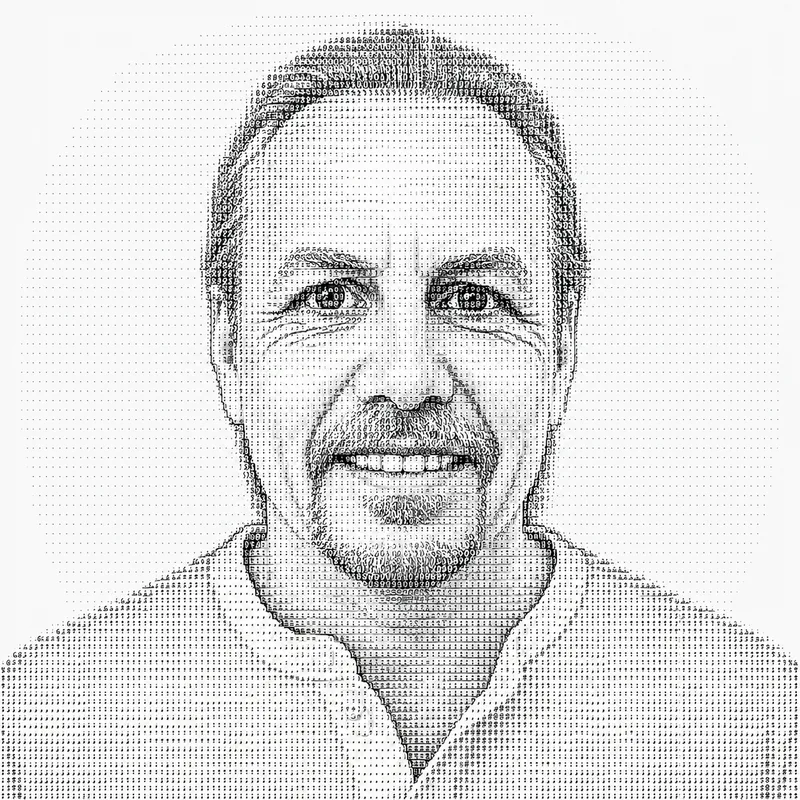
I'm Arve Sølland, founder of Invenire. I help teams design, evaluate, and ship AI systems that need to work in production — agents, retrieval, vision, analytics, automation, and AI-native engineering workflows.
founder-bio
Twenty years, three eras of stack.
I have spent 20 years shipping production software, from national-scale research infrastructure to modern agentic AI systems. Before founding Invenire, I was Technical Lead and Solutions Architect on EcoCommons, Australia's national platform for ecological and environmental modelling, and Technical Lead on the Pacific iCLIM project with Griffith University and SPREP.
Today, my work is focused on production AI: agents, retrieval, evals, telemetry, vision pipelines, analytics systems, coding agents, and the engineering practices required to make them reliable.
I stay close to frontier models and tools because the ground is moving quickly. But I am not interested in novelty for its own sake. The test is whether a system becomes more useful, reliable, faster, cheaper, safer, or easier to operate.
why-clients
Why clients bring me in.
Clients usually bring me in when AI has become important enough that experiments are no longer enough. They need someone who can speak strategy with leadership, architecture with engineers, and implementation with the codebase open.
-
The prototype works, but nobody trusts it.
I help teams add evals, telemetry, review loops, and architecture around fragile AI prototypes.
-
The opportunity is clear, but the path is not.
I help teams decide what to build, what to buy, what to ignore, and where AI can create real leverage.
-
The team is moving fast, but without a system.
I help engineering teams adopt AI-native workflows without sacrificing quality, architecture, or review.
-
The work is too important for generic advice.
I work best where the problem needs both senior engineering judgement and current AI capability.
career-arc
The same bar, three eras of stack.
the frontier work
2024–
Agents, evals, retrieval and vision in production. Analytics Agent for Shopify merchants, the Plant autonomous engineering platform, and two confidential applied-AI client systems — an autonomous model-training agent and an enterprise annotation and QA platform. The systems are on the work page; the judgment behind them is what I sell.
national-scale infrastructure
2020–2023
ECOCOMMONS · PLATFORM
I was Technical Lead and Solutions Architect for EcoCommons, Australia's national platform for ecological and environmental modelling — a ~$5M, three-year program across nine partner institutions at Griffith University. I designed the platform and its infrastructure and led the engineering team and partners through to launch. It taught me reproducibility as a load-bearing requirement and how to make domain experts productive on systems they didn't build — the same problem as agent design.
research infrastructure
before 2020
PACIFIC CLIMATE CHANGE PORTAL · iCLIM
Before the AI work, I spent over a decade building research infrastructure at national and international scale. As Technical Lead on the Pacific iCLIM project — a Griffith University and SPREP collaboration funded by Australia's Department of Foreign Affairs and Trade — I led the delivery of the climate-change decision-support tools behind SPREP's Pacific Climate Change Portal, including the Adaptation Project Tool and the Climate Finance Navigator, and ran the training that put them in the hands of government officials across the Pacific. It's the same discipline I bring now: ship the system to launch, make non-specialists productive on it, and stand behind the result in front of the people who depend on it. The stack changed — the bar didn't.
operating-principles
Four non-negotiables.
-
currency
Track what's changing, ship what holds up.
The AI frontier changes quickly. I track the models, tools, patterns, and failure modes closely, then apply the parts that hold up under production constraints.
-
evidence
Numbers, not vibes.
AI systems need measurement. I prefer evals, traces, golden datasets, regression gates, cost curves, and failure taxonomies over opinions about whether a model "seems better."
-
reliability
Non-determinism is not an excuse.
Production AI needs bounded responsibilities, structured outputs, observability, fallback paths, human review where appropriate, and tested recovery.
-
focus
The smallest system that creates leverage.
The goal is not to use the most AI. The goal is to ship the smallest system that creates leverage and can be trusted.
$ arve --stack --json
{
  "languages":   ["TypeScript", "Node.js", "Python", "PHP",
                  "SQL", "Rust", "Go", "Bash"],
  "ai":          ["LLM orchestration", "multi-agent systems",
                  "retrieval pipelines", "eval frameworks",
                  "vector indexing", "geospatial", "vision"],
  "infra":       ["AWS", "Azure", "GCP", "Docker",
                  "Kubernetes", "Terraform", "GH Actions"],
  "databases":   ["Postgres", "MySQL", "MongoDB", "DuckDB",
                  "Snowflake", "Vector stores"],
  "specialties": ["Agentic AI", "Enterprise security & compliance",
                  "Client-facing technical delivery"]
}
education
Formal training.
references
Available on request. EcoCommons and iCLIM relationships are real and reachable.
- 2006
-
Master of Information & Communication Technology
Australia
- 2005
-
Bachelor of Information Technology
Australia
- 2001
-
IT Studies
Norway
contact
Discuss an engagement.
For new engagements or anything Invenire-shaped, send a short note or use the channels below.
-
studio_inbox
Email
hello@invenire.com.au -
network
LinkedIn
linkedin.com/in/arvesolland